






















































































































Dinosaur Footprints Found on Italian Mountain Reveal Prehistoric Life
-
zainab ahsan
- December 17, 2025
- 0
- 2 min read

Thousands of ancient footprints believed to belong to prehistoric reptiles and early dinosaurs have been discovered high on a mountain in northern Italy, with scientists calling it one of the most extensive fossil track sites ever found in the Alps.
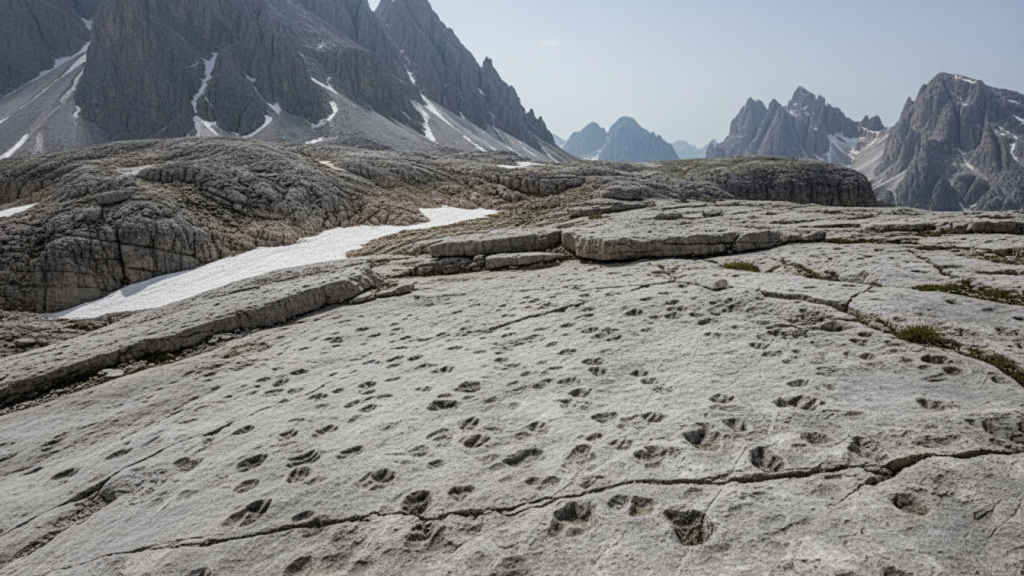
The footprints were uncovered in Stelvio National Park after melting snow and ice exposed large sections of rock at high altitude. The discovery was first noticed by a wildlife photographer, after which Italian researchers and palaeontologists began detailed scientific analysis of the site.
Scientists estimate the tracks date back between 210 and 280 million years, spanning the late Permian to early Triassic periods, a time when the region had a warm climate and formed part of a coastal plain. Researchers say this places the footprints among the earliest known evidence of large land-dwelling animals in the area, from a period before dinosaurs became dominant.
According to experts involved in the study, the site contains thousands and possibly tens of thousands of individual footprints, spread across several kilometers of rock surface. The tracks vary in size and shape, suggesting they were made by multiple species, including early reptiles and long-necked, plant-eating animals similar to Plateosaurus, an early dinosaur known to have lived in Europe.
Scientists say some of the footprints appear in parallel patterns, indicating the animals may have moved in groups, offering rare insight into early social behavior and movement. Clear impressions of toes and claws have been preserved, allowing researchers to study posture, walking speed and body weight.
The footprints are located on steep, high-altitude rock faces, in some areas more than 2,400 meters above sea level, making access difficult. As a result, scientists are using drones, high-resolution photography and digital mapping to document and analyses the site without damaging the fossils.
Researchers say the discovery highlights the impact of climate change on archaeology and paleontology. While retreating ice has revealed previously hidden evidence of ancient life, scientists warn that exposure to weather and erosion could threaten the long-term preservation of the tracks.
Italian authorities are now working with scientific institutions to protect the area and continue research. Experts say it could take years of study to fully understand the scale of the site and what it reveals about early life on Earth.