





















































































































Pakistan Issues High Alert as “Super Flu” Cases Rise Nationwide
-
maham shaikhani
- December 17, 2025
- 0
- 4 min read

The increase in super flu cases in Pakistan, especially Karachi, mirrors a broader global trend. The World Health Organization (WHO) has reported rising influenza activity across several regions in the glove, with super flu identified as a leading strain in multiple countries during the current flu season.
The National Institutes of Health (NIH) has advised federal and provincial health departments to remain on high alert, strengthen disease surveillance and prepare healthcare facilities for a possible increase in patient numbers. Hospitals, particularly in major urban centres, have been instructed to review isolation protocols and ensure adequate readiness to manage influenza-related cases.
According to surveillance data cited by health officials, Pakistan recorded more than 340,000 suspected influenza-like illness (ILI) cases between late October through early December.
“Yes, we have witnessed confirmed cases of H3N2 influenza (super Flu) in Pakistan since November this year. Out of total around 1,691 cases reported throughout Pakistan since last month, 12 percent are of the so called super flu,” said Dr. Shafiq-Ur-Rahman, Senior Scientific Officer at Pakistan’s Center for Disease Control (CDC).
The NIH has also noted that since May 2025, nearly two-thirds of reported Influenza A cases in the country have been linked to H3N2, indicating that it is the dominant circulating strain this season.
H3N2 is a subtype of the Influenza A virus, known for its ability to spread quickly, particularly during colder months. Health experts say the strain currently circulating in Pakistan includes a genetically drifted sub-clade, known as Subclade K, which may transmit more efficiently, though it is not necessarily associated with more severe disease.
The virus spreads primarily through respiratory droplets released when an infected person coughs or sneezes, as well as through contact with contaminated surfaces. Crowded indoor spaces and poor ventilation significantly increase the risk of transmission.
Health officials say continued monitoring, vaccination and responsible public behavior will be key to limiting the spread of the virus in the coming weeks as winter conditions persist.
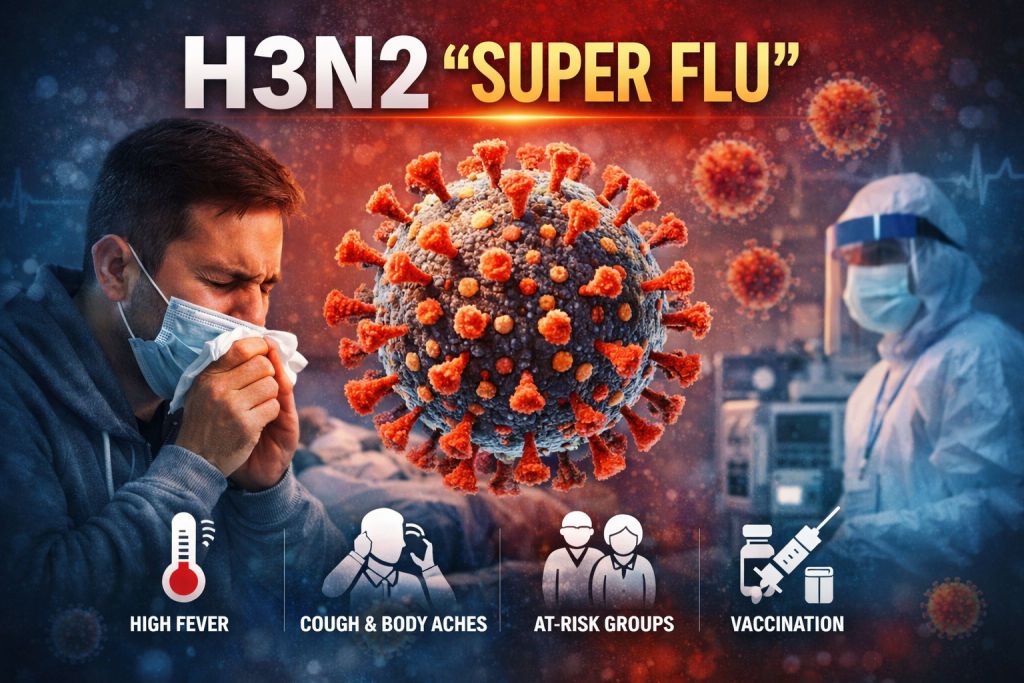
Symptoms of H3N2 infection are similar to seasonal flu but they can be more intense. Common signs include high fever, severe fatigue, body aches, dry cough, headache and sore throat. In some cases, especially among children, vomiting or diarrhoea may also occur.
Health authorities warn that certain groups face a higher risk of developing severe complications. These include elderly individuals, young children, pregnant women, people with weakened immune systems, and those suffering from chronic conditions such as diabetes, heart disease or lung disorders.
The NIH and infectious disease experts strongly recommend seasonal influenza vaccination, stating that currently available flu vaccines remain effective against the circulating H3N2 strain. Officials emphasize that vaccination significantly reduces the risk of severe illness, hospitalization and complications.
Public health guidance also urges citizens to follow basic preventive measures, including frequent hand-washing, covering coughs and sneezes, wearing masks when experiencing flu-like symptoms, avoiding crowded places when sick and ensuring proper ventilation in indoor spaces.
Several provincial health departments, including Khyber Pakhtunkhwa’s, have issued additional advisories to hospitals and clinics, focusing on early symptom recognition, timely testing and prompt treatment to prevent severe outcomes.
Health authorities have repeatedly stressed that there is no cause for panic, describing the situation as a seasonal influenza surge rather than a public health emergency. Experts note that while case numbers are rising, H3N2 remains a familiar virus that can be managed through standard medical care and preventive strategies.
The increase in H3N2 cases in Pakistan mirrors a broader global trend. The World Health Organization (WHO) has reported rising influenza activity across several regions in the northern hemisphere, with H3N2 identified as a leading strain in multiple countries during the current flu season.
Health officials say continued monitoring, vaccination and responsible public behaviour will be key to limiting the spread of the virus in the coming weeks as winter conditions persist.