












































































































SBP Cuts Policy Rate by 50bps to 10.5% as Economic Stability Improves

Karachi / Islamabad:
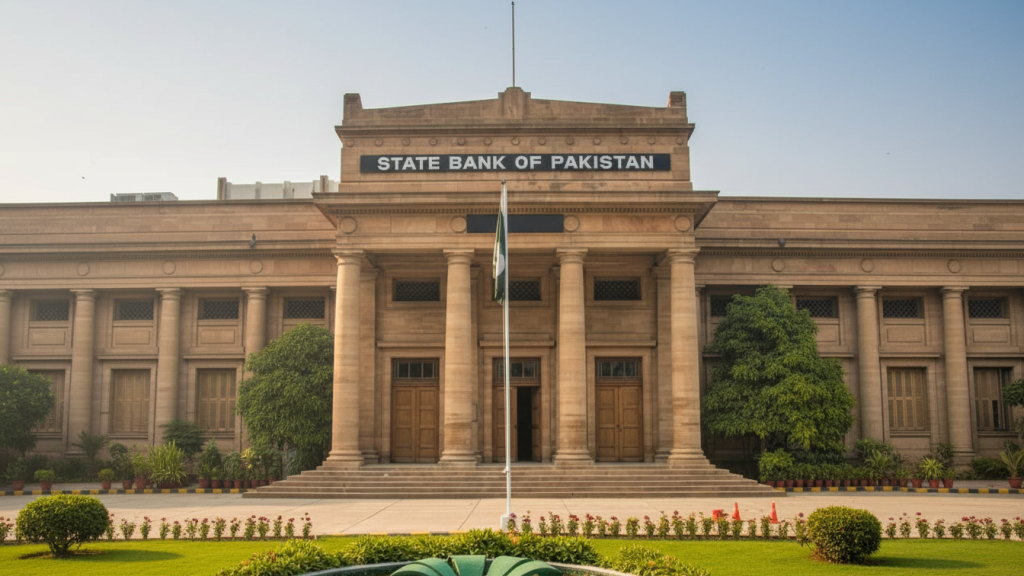
The State Bank of Pakistan’s Monetary Policy Committee (MPC) has announced a 50 basis points cut in the policy rate, lowering it from 11 percent to 10.5 percent, effective December 16, citing stable inflation, improving domestic activity, and a cautiously optimistic economic outlook.
According to the State Bank of Pakistan, headline inflation remained within the 5% – 7% target range between July and November of FY26, supported by favorable global commodity prices and well-anchored inflation expectations. However, the MPC warned that due to a low base effect, inflation could temporarily rise above the target toward the end of FY26, before returning to the target range in FY27.
Despite a cautious monetary stance, the MPC noted clear signs of improvement in domestic economic activity. This was reflected in several indicators, including a stronger-than-expected 4.1% year-on-year increase in large-scale manufacturing during the first quarter of FY26. The central bank said there was room for a rate cut to support sustainable growth while maintaining price stability, even as global conditions particularly on the export front remain challenging.
On the real sector, the State Bank said industrial performance has remained stable, supported by higher sales of automobiles, fertilizers and cement, as well as improved imports of machinery and other capital goods. In agriculture, wheat production is expected to exceed its official target, a development likely to support the services sector as well. Based on these trends, the MPC projected real GDP growth in FY26 to remain toward the upper end of the 3.25 to 4.25 percent range.
On the external front, the central bank reported that foreign exchange reserves have continued to rise despite heavy external debt repayments, supported by strong workers’ remittances and IMF inflows. Following the successful completion of reviews under the IMF’s Extended Fund Facility (EFF) and Resilience and Sustainability Facility (RSF), the receipt of a 1.2-billion-dollar tranche pushed reserves above 15.8 billion dollars, with the SBP projecting reserves to reach 17.8 billion dollars by June 2026.
However, the MPC cautioned that external risks persist, particularly due to a challenging export environment. While imports increased in line with improving economic activity, overall exports remained under pressure, largely due to a decline in food exports, especially rice. The current account deficit stood at 0.7 billion dollars during July to October, and is projected to remain between zero and one percent of GDP for the full fiscal year.
On the fiscal side, both the overall and primary balances recorded surpluses in the first quarter of FY26, largely due to substantial profit transfers from the State Bank. Although the expenditure-to-GDP ratio declined compared to last year, revenue performance remained a concern. FBR tax collection growth slowed sharply, rising by only 10.2% year-on-year during July to November, increasing the need for stronger revenue mobilization efforts in the remaining months.
The MPC also highlighted labor market challenges, noting that the unemployment rate has increased since 2020–21, despite rapid growth in overall employment. Meanwhile, the State Bank’s latest surveys showed an improvement in consumer confidence, while business confidence remained positive but somewhat moderated.
Reacting to the policy decision, Prime Minister Shehbaz Sharif welcomed the interest rate cut, calling it a positive step for the business community and the common man. He said the government’s economic team had delivered results, adding that Pakistan had achieved stability and was now moving toward sustained growth. The prime minister said the government is providing maximum possible relief through economic improvement, noting that lower interest rates and access to cheaper credit will particularly benefit small and medium-sized enterprises.
Looking ahead, the State Bank emphasised that coordinated and prudent monetary and financial policies, along with structural reforms, remain critical to placing the economy on a path of sustainable and higher growth. These reforms include expanding the tax net and privatising loss-making state-owned enterprises. While acknowledging that there was scope for a deeper rate cut, the MPC said a cautious approach was adopted to balance growth with inflation risks and to keep inflation anchored within the target range over the medium term.